
Shalboni’s women fighting against the polluting sponge-iron industry and alcoholism
The sponge-iron industry is clearing forest illegally and also flagged for dumping iron waste in agriculturral land; people from many Adivasi communities have lost their land to the sprawling sponge-iron industry

Shalboni, Jitushol (Jhargram): “Women here can’t collect the forest produce. All the Shal leaves have a black layers of carbon because of the pollution. All the leaves are black here not green”, says Saraswati Mahato, a 50-year-old-woman and a farmer who herself witnesses the environmental degradation that happened in various villages in Shalboni after Rashmi group set up their sponge-iron and cement factory in Shalboni’s Jitushol.
Situated 175 k.m. away from Kolkata, Jhargram was made into a separate district in 2017 after separating it from West Medinipur. It has a forest cover of 59,497 hectare, out of which 52392.62 hectares fall within protected areas.
Rashmi group set up their factory in 2009 by acquiring agricultural land and they continue to clear forest areas illegally to expand their units, the villagers allege.

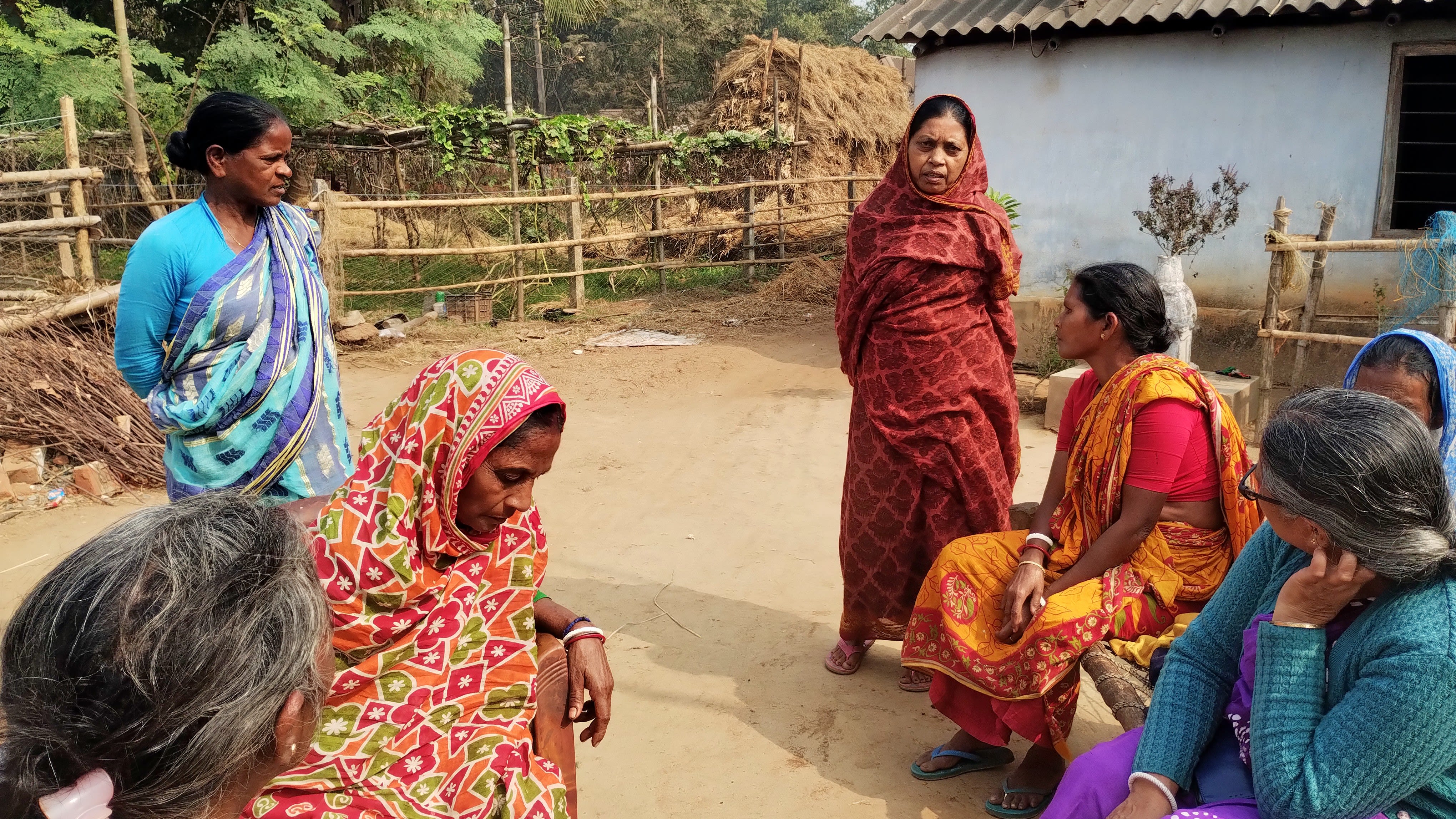
Saraswati has nearly one and half acre of land where she cultivates paddy and sesame but the yields have badly affected by the pollution in the area.
They have to constantly struggle for livelihood as they do not get any more work under MGNREG scheme after center stopped disbursal of fund to the state.
“I worked under MGNREG but I didn’t get a single penny after work,” says Saraswati. Many women from the villages in these areas are employed by the forest department to look after the forest but Saraswati says they do not get any wage from the forest department for this work.
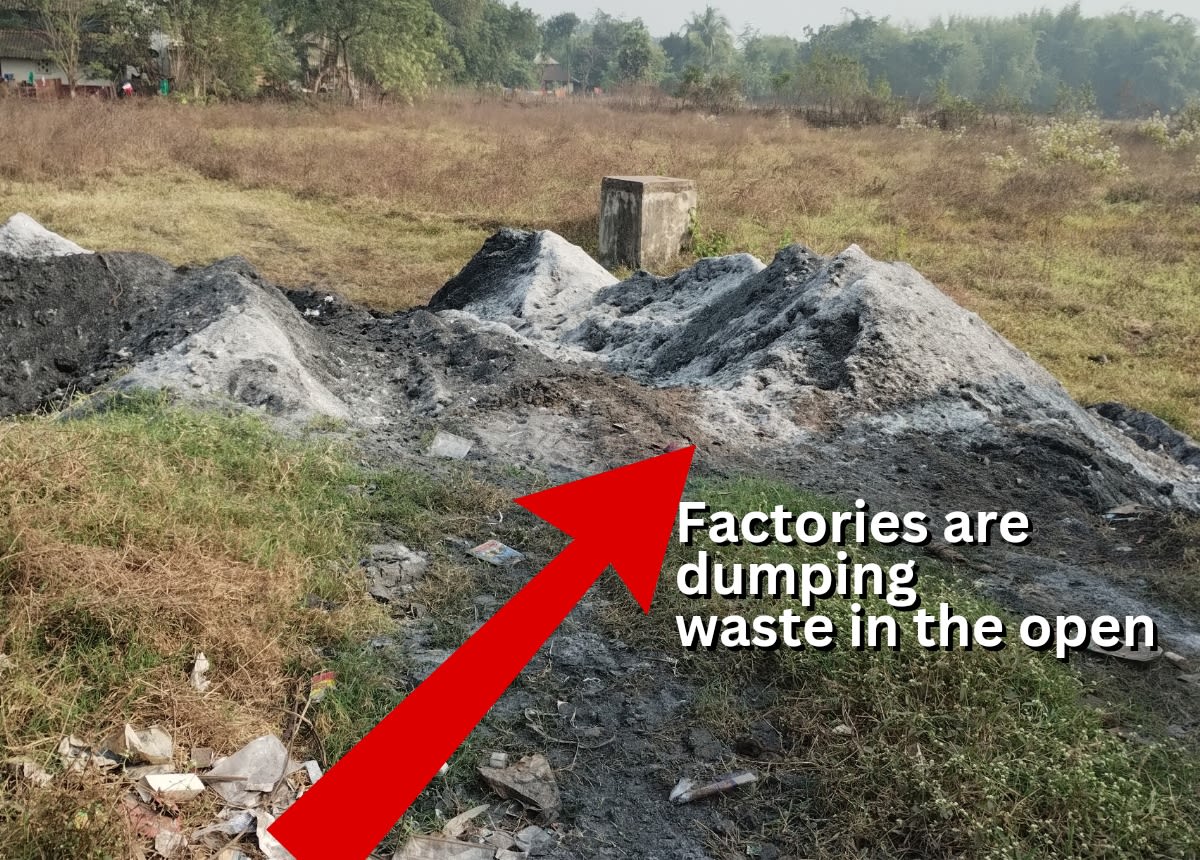
Khukurani Mahato, a 75-year-old woman has lost her agricultural land to the sponge-iron factory. “They grabbed my land and build boundary walls around it and they often dump iron ore waste in agricultural land thus forcing people sell their land to Rashmi group”, says Khukurani. Khukurani was saying that whenever the company wants to grab someone’s land it dumps there iron ore waste in the night, making the land infertile. She also mentioned that the vegetables’ size also got small than normal size.
Khukurani adds, “Proportion of agricultural land has largely been reduced because of land grabbing by Rashmi group”.

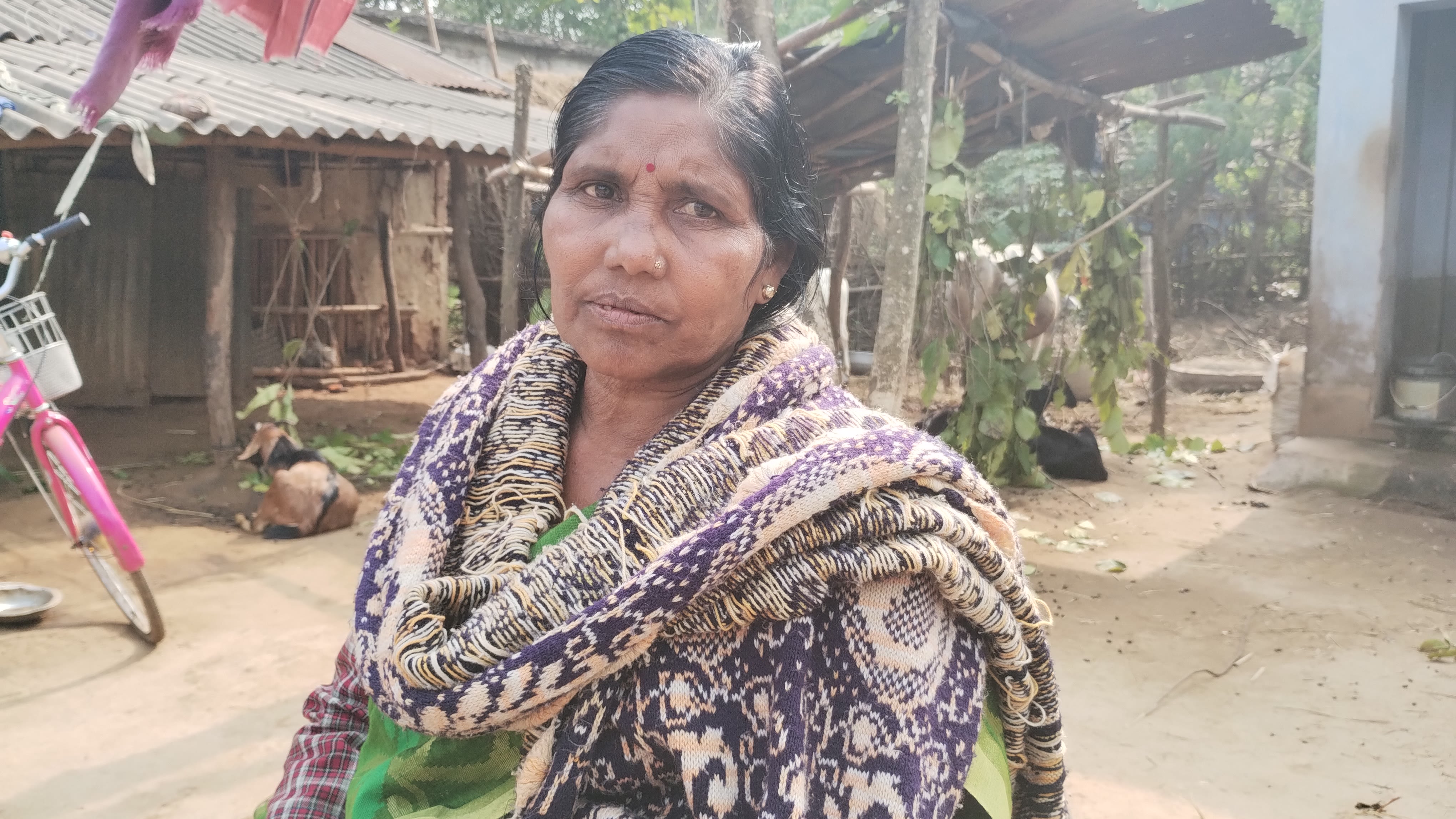
Saraswati Mahato, a leader of the ‘Garh-Shalboni Samaj Unnyoyon Mahila Samiti’, is talking about how women are organizing themselves in the area. Photo: Indrani
Saraswati Mahato, a leader of the ‘Garh-Shalboni Samaj Unnyoyon Mahila Samiti’, is talking about how women are organizing themselves in the area. Photo: Indrani

Khukurani Mahato's agricultural land was grabbed by Rashmi group. Photo: Indrani.
Khukurani Mahato's agricultural land was grabbed by Rashmi group. Photo: Indrani.
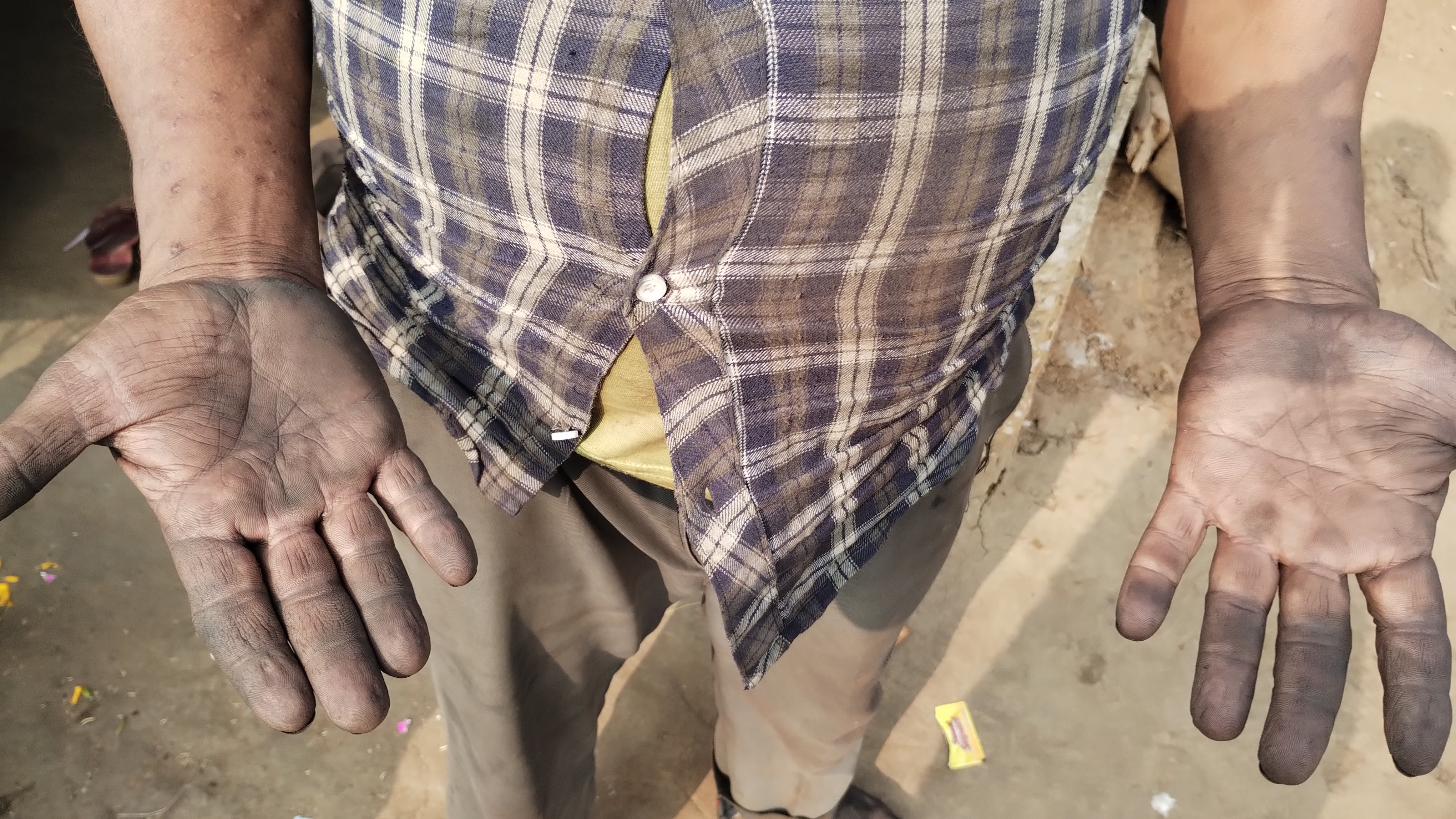
The effect of the pollution is much more visible in Shalboni’s Jitushol. Alok Middya, a 45-year-old mid-day meal worker and a resident of Jitushol village was saying that, you can’t sit outside your home for long- time and you can’t dry your clothes as it turned black. She also reiterated the difficulties to find a steady source of income. “I worked in the forest but didn’t get a penny. I got only 1000 rupees per month working as a mid-day meal worker”, says Middya.
Alok Shukla, owner of a bed sheet making factory in Jitushol said that because of the pollution from the sponge-iron factory they can’t dry their bed sheet after putting colours on them under the sun. They had to install additional heaters indoors to dry the colours, causing them an increase in the production cost.
Pollution control board already marked sponge-iron industry as a red category industry, which means this industry have very high pollution potential. Though any highly polluted industry is restricted in forest areas, Rashmi group has managed to get permission from government back in 2009. The factory has been found to be violating regulations of Central Pollution Control Board.

After complaints from the residents, West Bengal Pollution Control Board also found heaps of industrial waste in the farmland and issued an order directing the company to take remedial action. The Rashmi group was also fined Rs. 75 lakhs for the pollution caused by it.

When the ‘Patwaris’, as the company owners are referred to locally, tried to raise boundary walls on their land, it is the women who try to resist them. “We also submitted petitions against Rashmi group when they tried to grab the gardens where women collectively cultivates many fruits like Mangoes and Cashew”, says Saraswati.

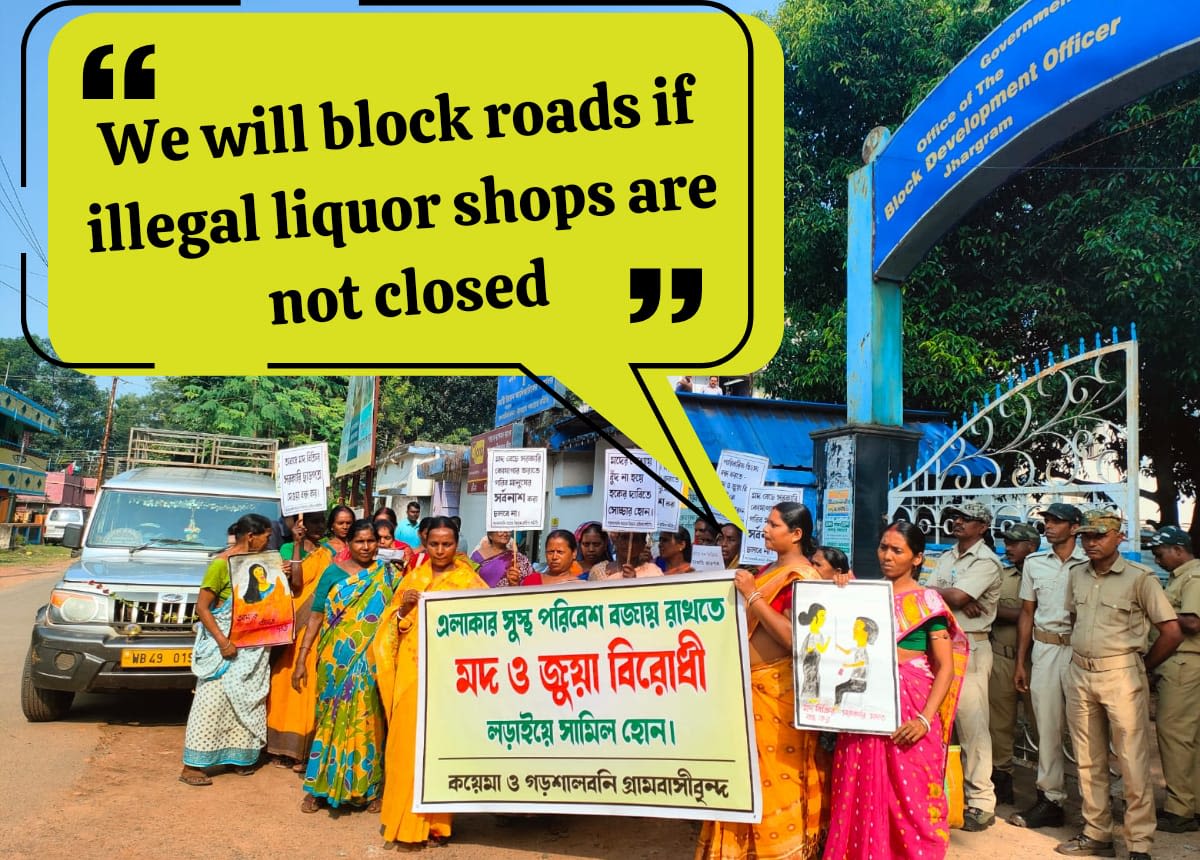
Photo Credit : Shromojibi Nari Mancho
Photo Credit : Shromojibi Nari Mancho
Women from this organization are also creating awareness against increasing alcoholism and illegal liquor shops in the area. Namita Mahato, a woman in her early twenties and one of the leaders of the women’s organization, was saying that here the liquor shops mix some kind of intoxicant and drugs in the liquor. They sell the liquor just beside the school and underage boys even secretly go to consume them.
“We will do a bigger agitation, we will block roads if this doesn’t stop”, she adds, “we have threatened them that whenever we will catch them selling alcohol we will throw it away.”
 Built with Shorthand